September has arrived, and colder weather will soon return to Cary and communities across McHenry County. While homeowners are cleaning gutters, servicing furnaces, and preparing their yards for fall, the septic system is one part of the property that can easily be overlooked.
A septic system continues working throughout the winter, even when the ground is frozen or covered by snow. Addressing maintenance concerns in early fall gives you time to complete necessary septic pumping or repairs before harsh weather makes the work more difficult. Here are several practical ways to prepare your system for the colder months ahead.

Schedule Septic Pumping Before Winter if It Is Due
If you cannot remember the last time your septic tank was pumped, now is a good time to check your maintenance records and schedule an inspection.
The U.S. Environmental Protection Agency states that household septic tanks are typically pumped every three to five years. However, your ideal pumping schedule depends on several factors, including:
- The size of your septic tank
- The number of people in your household
- The amount of wastewater your household produces
- The volume of solids entering the system
- Whether the home uses a garbage disposal
A tank that contains excessive sludge and solid waste has less room to receive wastewater. Waiting until the system is already struggling can increase the likelihood of slow drains, sewage odors, backups, or damage to the drainfield.
Scheduling septic tank pumping in Cary, IL, during the fall also allows the service technician to locate and access the system before frozen soil or heavy snow complicates the process.
Do Not Ignore Septic System Warning Signs
Septic problems rarely improve on their own. If your system is showing signs of trouble in September or October, waiting until winter could allow a manageable issue to develop into a larger repair.
Contact a septic professional if you notice:
- Toilets, showers, or sinks draining slowly
- Gurgling sounds coming from household plumbing
- Sewage backing up through drains
- Unpleasant odors near the septic tank or drainfield
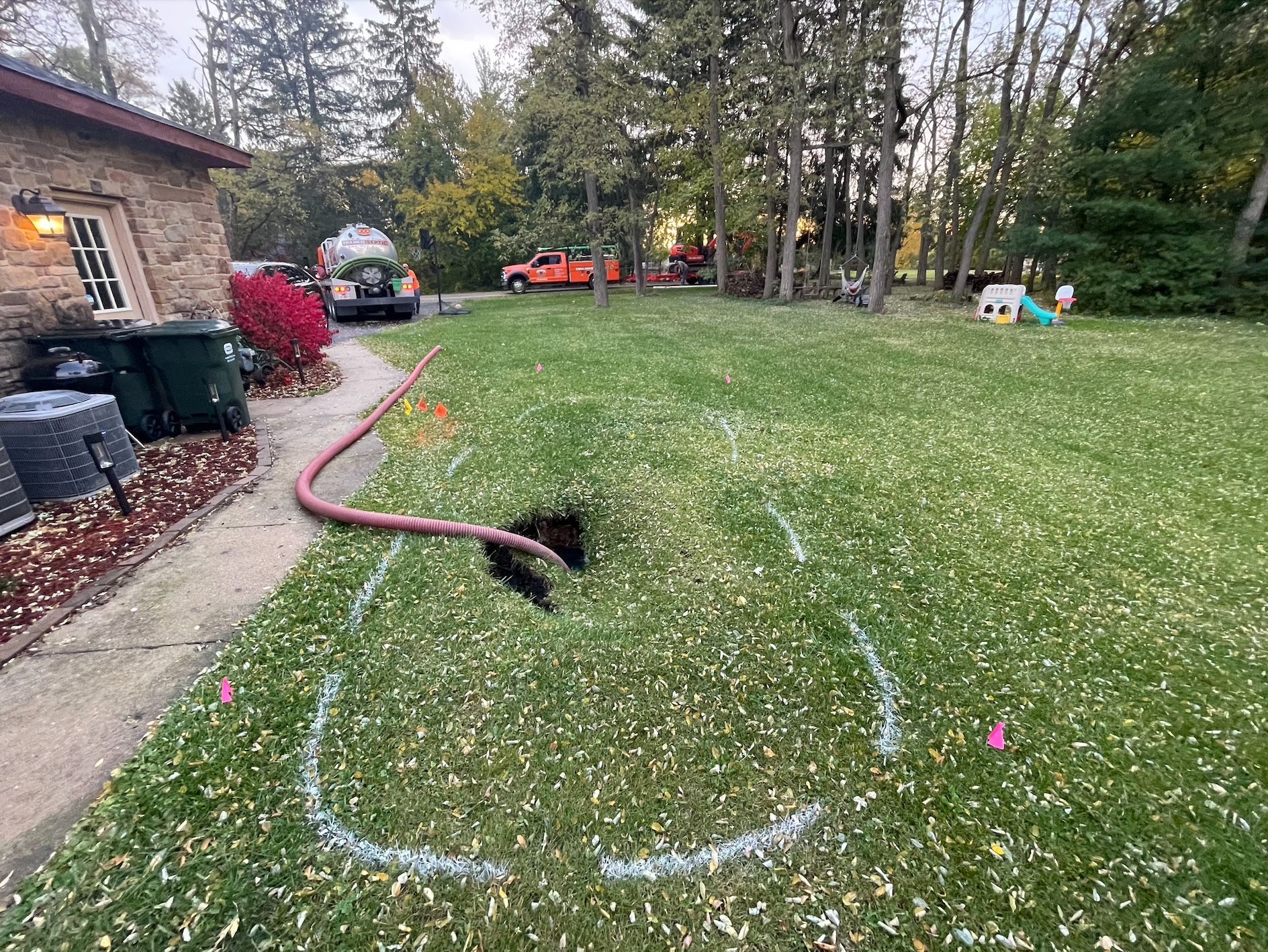
- Standing water or consistently damp soil near the system
- Unusually green or spongy grass over the drainfield
- A septic alarm activating
These symptoms may indicate a full tank, clogged line, damaged component, or drainfield problem. Helmer Septic provides septic inspections, pumping, repairs, replacements, and installations throughout McHenry, Lake, Cook, and Kane counties.
Having the problem evaluated before temperatures fall can help prevent an inconvenient septic failure during the colder part of the year.
Protect the Septic Tank and Drainfield
The soil above your septic system helps protect underground components. Avoid activities that can damage pipes or compact the soil around the drainfield.
Do not park cars, trailers, recreational vehicles, or heavy equipment over the septic tank or drainfield. When snowfall begins, make sure anyone plowing your driveway understands where the system is located. Heavy vehicles and snow-removal equipment should remain away from the septic area.
You should also avoid building patios, sheds, or other permanent structures over the system. Keeping the area accessible makes future septic maintenance and pumping easier.
If you are unsure where your tank and drainfield are located, a professional septic inspection can help identify the system’s layout.
Check for Plumbing Leaks Inside the Home
Every gallon of water that enters a drain must be processed by the septic system. A leaking toilet, dripping faucet, or malfunctioning fixture can continuously send unnecessary water into the tank.
Before winter, check for:
- Toilets that continue running after being flushed
- Faucets or showerheads that drip
- Leaking washing-machine connections
- Unusually high water bills
- Water softeners that cycle more frequently than expected
Repairing leaks can reduce strain on the septic system and prevent the drainfield from becoming overloaded. Water efficiency is one of the EPA’s four primary recommendations for proper septic system care.
Spread Out High-Water-Use Activities
Fall and winter can bring holiday guests, extra laundry, larger meals, and more time spent indoors. These activities may cause a sudden increase in household water use.
Avoid running several water-intensive appliances at once. Instead of completing several loads of laundry in one afternoon, spread them throughout the week. Try not to operate the washing machine and dishwasher while multiple people are showering.
This gives the septic tank time to separate waste and send wastewater into the drainfield at a manageable rate.
Be Careful About What Goes Down the Drain
A septic system is designed to process household wastewater and human waste—not garbage.
Only human waste and toilet paper should be flushed down the toilet. Items labeled “flushable” can still create clogs or remain in the tank much longer than toilet paper.
Keep the following materials out of your drains:
- Cooking grease and oil
- Paper towels and facial tissues
- Feminine hygiene products
- Baby wipes and cleaning wipes
- Dental floss
- Cat litter
- Coffee grounds
- Paint, solvents, and harsh chemicals
- Leftover medications
During holiday cooking, allow grease to cool and place it in the trash instead of pouring it into the kitchen sink. Fats, oils, and grease can collect inside plumbing and add unnecessary solids to the septic tank.
Keep Gutters and Drainage Away From the Drainfield
Fall rain, melting snow, and improperly directed runoff can saturate the soil around a drainfield. When the ground becomes excessively wet, the drainfield may have difficulty accepting and treating wastewater.
Make sure gutters, downspouts, sump pumps, and landscaping drainage direct water away from the septic system. Do not install an irrigation system or create a low area where water collects above the drainfield.
Keeping excess water away helps the soil continue performing its essential role in the wastewater-treatment process.
Know Where Your Septic System Is Located
Once snow covers the property, septic tank lids and system boundaries can become difficult to identify. September is a good time to find the tank, drainfield, and any electrical or mechanical components associated with the system.
Keep a simple property diagram with your septic records. Make sure household members and contractors know not to drive, excavate, or store heavy materials in that area.
You should never open or enter a septic tank yourself. Septic tanks contain dangerous gases and should only be serviced by trained professionals.
Start Fall With a Dependable Septic System
Preventive maintenance is easier to schedule than an unexpected winter backup. If your septic tank is due for pumping, your drains are slowing down, or you have concerns about the system’s condition, early fall is a smart time to request professional service.
With more than 40 years of experience, Helmer Septic provides septic pumping, repairs, replacements, installations, and maintenance for homeowners throughout Cary, Crystal Lake, McHenry, Woodstock, Barrington, Lake Zurich, Huntley, Algonquin, and other nearby Illinois communities.
Contact Helmer Septic today for a free estimate and prepare your property for the colder weather ahead. Call 224-888-POOP to schedule septic service in McHenry County or a surrounding area.
Maintenance recommendations referenced from the U.S. Environmental Protection Agency’s septic-care guidance.